If you work around courtrooms, construction websites, or licensing desks enough time, you begin to observe exactly how frequently individuals make use of "bond" as if it indicates something. It does not. A surety bond and a bail bond share some DNA, however they address various troubles, involve different gamers, and lug really various effects when things go wrong. If you are a service provider bidding on public job, an entrepreneur applying for a license, or a family member calling a bail bondsman at 2 a.m., you need to recognize which sort of bond you are speaking about and what it binds you to do.
This overview makes use of the auto mechanics of both systems, the money moves behind them, and the edges where folks obtain tripped up. I will certainly use practical instances and ordinary language. The purpose is not just to specify the terms, yet to assist you make far better choices when a bond is required.
What a bond actually is
A bond is a pledge backed by cash that connects a void in trust. Somebody needs guarantee that an individual or company will do a point. They want greater than a handshake. A bond presents a 3rd party that assures performance or look. If the principal falls short, the third party pays the hurt party and then seeks repayment from the principal.
That standard structure applies to surety bonds and bail bonds. The divergence starts with the function of the promise and the law that regulates it.
The surety bond triangle: principal, obligee, surety
In a guaranty bond, three events accept an agreement:
- The principal is the person or organization that need to do something, such as complete a construction job, abide by a permit, or remit taxes. The obligee is the event that calls for the bond and take advantage of it. Believe state licensing boards, task owners, or municipalities. The surety is an insurance provider or guaranty company that finances the bond and stands behind the principal's promise.
The principal pays a premium to the surety for the bond, typically on an annual basis for permit bonds, or a single costs for agreement bonds. Costs commonly range from 0.5 percent to 3 percent of the bond quantity for strong candidates, and greater for weak credit report or risky responsibilities. The guaranty does not expect to pay a case. It underwrites based on the principal's ability and character. If a claim stands, the surety pays the obligee, then goes after the principal for compensation plus costs. Guaranty bonds are not insurance policy for the principal. They are credit instruments.
Common instances bring different obligations:
- License and permit bonds: A dealer or professional acquires a bond as a condition of licensing. The bond ensures the general public that the business will follow legislations and, if not, make up damaged parties. Contract bonds: Proposal, performance, and repayment bonds ensure that a service provider will certainly honor a proposal, do the work, and pay subcontractors and suppliers. Court bonds: Administrator, guardian, or allure bonds guarantee court orders are carried out and funds are protected. These are civil, not criminal, obligations.
Everything in the guaranty world revolves around underwriting the principal's ability to carry out. Financial declarations issue. Experience matters. Recommendations, work-in-progress schedules, and previous insurance claim background matter.
The bail bond triangle: defendant, court, bondsman
Bail bonds utilize a comparable shape, however the roles and purpose shift:
- The accused is the person charged with a crime that requires launch prior to trial. The court sets bail, a dollar quantity designed to encourage the offender to appear in all needed hearings. The bail bond agent (bail bondsman) is accredited to upload a guaranty bond with the court, typically backed by a nationwide surety company, in exchange for a charge from the accused or family.
When a court establishes bail, it can be cash money bail or bondable bail. If the offender can not deposit cash with the court, a bail bond agent can post a bail bond, assuring the court the complete bail amount if the accused stops working to appear. In return, the representative charges a nonrefundable premium, generally around 10 percent in many states, though statutes and market technique vary. Some states ban commercial bond completely or restrict it greatly. In those jurisdictions, launch generally goes through pretrial services, supervised launch, or cash money bail only.
If the defendant appears at every required date, the bond is vindicated when the case fixes, and the court releases the surety's commitment. The premium is not returned. If the defendant avoids court, the judge can surrender the bond. The bail bondsman after that has a home window to find and surrender the offender. This is where recovery agents come in, based on stringent rules that differ by state. If the window closes without surrender, the court converts loss to a judgment and needs complete settlement. The bail bondsman pays the court, then looks for repayment from the offender and any kind of indemnitors that authorized the bond paperwork.
Unlike most surety items, bail bonds run warm. They are short term, high touch, and high risk. Emotion is baked into the deal. Collateral prevails. So is the need to explain effects to individuals who have actually never entered a courthouse.
Same skeletal system, various goals
Surety bonds and bail bonds both transfer danger to a 3rd party for a rate. From there, the paths diverge.
- Who is being safeguarded: Guaranty bonds protect an obligee or the public against nonperformance or offenses. Bail bonds secure the court's process by securing appearances. What triggers a case: Surety declares develop from contract violations, regulative violations, or fiduciary failures. Bail declares occur from failing to appear. How premiums are set: Surety premiums reflect underwriting, credit report, and scope of responsibility. Bond premiums are commonly managed and connected to the bond quantity, with underwriting concentrated on flight risk. How long they last: Permit bonds can run for years. Efficiency bonds track the life of a job. Bail bonds usually run from arrest to personality, which can be weeks to numerous months depending on the docket. What occurs after an insurance claim: In surety, the guaranty may set up completion, work out with subs, or work out with the obligee, after that recover from the principal. In bail, the bondsman searches for the defendant or pays the loss, after that accumulates from indemnitors.
The similarities can misguide novices. I have seen specialists ask a bond company concerning a license bond. I have actually seen accuseds' households call an insurance broker for aid with a bond premium. The repair is recognizing which system you are in.
Money circulations and collateral
Follow the cash to see the differences in risk.
With a guaranty bond, a primary pays a costs that may be a tiny fraction of the bond amount. For a $100,000 specialist certificate bond, a clean-credit principal may pay a few hundred bucks per year. For a $10 million efficiency bond, a common costs could run 1 percent to 3 percent based on the professional's financial problem, task intricacy, and track record. Security is unusual for license bonds however can appear in challenging situations. For big or low contract bonds, sureties may need funds control, joint check agreements, or perhaps collateral like letters of credit history. The guaranty's deeper security is indemnity. Principals and usually their proprietors sign a general indemnity agreement that provides the guaranty option to business and individual properties if a case occurs.
With a bail bond, the premium is greater relative to the obligation and is typically nonrefundable. For a $50,000 bail, a typical premium could be $5,000 in a jurisdiction that enables a 10 percent rate. The bail bondsman usually requires security to cover the complete direct exposure, such as a lien on a car or a deed of trust on home, plus several indemnitors with stable work. Payment plans prevail however included limited timelines and late charges. The bail representative underwrites promptly, in some cases within an hour, concentrated on ties to the area, prior warrants, and the chances of appearance.
These various financial frameworks speak to that births danger. Guaranty firms depend on underwriting and contractual indemnity, take care of claims over weeks or months, and commonly salvage worth by finishing a project or fixing an infraction. Bail representatives deal with unexpected, binary threat: turn up and the bond vindicates, miss court and the clock begins. They alleviate by picking customers, safeguarding security, and scooting when a loss occurs.
How courts deal with each bond
Courts sit at the facility of both systems, but in extremely various roles.
In the guaranty context, courts show up when disagreements emerge. A public entity might state a professional in default and make an insurance claim on a performance bond. The surety after that investigates. If there is an argument over whether a default happened or what remedy is suitable, lawsuits can comply with. Courts additionally need fiduciary bonds for guardianships, estates, or charms. The court's goal is to safeguard possessions and ensure conformity, not to protect appearances.
In the bond context, the court essentially holds the bond. The clerk records the bond, concerns bond forfeitures, and regulations on exoneration. Timelines are strict. In numerous states, the bondsman has 90 days to produce the defendant after a loss, in some cases with expansions for good cause. Juries impose those target dates with an eye toward public safety and security and the integrity of the docket. That is why the court will certainly think about elements like willful failing to appear, a hospital stay, imprisonment in an additional jurisdiction, or fatality before converting loss to a judgment.
Understanding the court's rhythm assists. I have actually watched bonds conserved due to the fact that guidance submitted a timely movement with proof that a defendant remained in custody somewhere else. I have additionally seen forfeits stand when no person appeared with documents. In guaranty disagreements, I have seen cases diminish when a specialist provided the surety accessibility to task documents early and mapped a conclusion strategy. Silence aids no one.
Practical instances that make clear the line
Take a tiny car dealership in a state that calls for a $25,000 certificate bond. The bond assures the supplier will abide by labeling, tax, and consumer defense legislations. If the dealer fails to move title or damage odometers, a customer can assert on the bond. The guaranty checks out, pays legitimate insurance claims up to the bond amount in aggregate, then seeks repayment from the dealer. The bond continues to be basically year to year as long as the dealer renews it, commonly with a yearly premium of a few hundred dollars.
Contrast that with a 28-year-old defendant charged with a nonviolent felony. Bond is evaluated $30,000. The household calls a bail bond agency. After a quick check of employment and prior failings to show up, the representative accepts compose the bond for a $3,000 premium, plus a lien on a paid-off car. The offender has to sign in regular and attend every hearing. If the offender misses out on a court day, the representative has actually a defined period to surrender the offender or pay the $30,000. The state does not soak up the loss. The bail bondsman does, after that goes after the family members for reimbursement if the bond is transformed to a judgment.
Or think about a public jobs project with a $5 million performance bond and a $2.5 million repayment bond. Midway through, the contractor encounters capital problem. The guaranty steps in after an official default. Options include financing the specialist to finish, tendering a replacement service provider, or taking control of and completing the job. The guaranty's aim is to satisfy the obligee at the lowest overall price and maintain civil liberties of healing. Even when the obligee is furious, a structured completion strategy can save months and millions. None of that has an analogue in the bond world.
Where people obtain burned
Patterns repeat.
- Mistaking insurance coverage for defense: Principals often deal with a guaranty bond like insurance coverage. It is not. If a guaranty pays an insurance claim, expect a demand letter the exact same week. Settlement consists of principal, interest, and insurance claim expenses. Ignoring underwriting: For agreement bonds, weak financials push costs up or closed doors entirely. I have actually seen growing specialists struck a wall since they underinvested in bookkeeping. Timely, precise financial statements unlock capacity. Sloppy books do the opposite. Shopping bond on cost alone: A lower bail premium can be a red flag if it violates state law. If a price seems as well good, ask just how the agency is adhering to laws and what security is called for. A credible bondsman will certainly clarify the contract line by line. Delaying communication: In bond matters, hours issue. If an accused misses court accidentally, calling the bondsman and guidance immediately can save the bond. Waiting a week usually makes it worse. In surety matters, alerting the guaranty early when difficulty makes gives you much more choices and reveals good faith.
It is also worth keeping in mind the plan backdrop. Some states have actually cut cash money bond and commercial bail bonds, specifically for low-level offenses. That moves the landscape for accuseds and bail bondsmans alike. On the surety side, public owners maintain tightening bonding needs to cover even more risks, such as subcontractor default insurance policy alternatives or broadened warranty responsibilities. The rules are not static.
The documents that carries the load
The bond form is not filler. It specifies the warranty and how cases work.
Surety kinds differ commonly. A performance bond form could be a typical AIA file or a customized owner-drafted form with difficult terms. Triggers, notification demands, and solutions live in those paragraphs. I have actually seen a specialist authorize a bond type that forgoed defenses and permitted the proprietor to declare default with almost no cure duration. That blunder expense 7 numbers. Constantly review the type and bargain terms upstream, prior to the bid.
License bond forms are often dictated by the state. They state the bond quantity, advancing obligation, and that can assert. Some types enable straight consumer cases. Others route asserts through the licensing company. Renewal terms and cancellation stipulations matter. A normal form enables the guaranty to cancel with 1 month' notification to the obligee, but the principal continues to be responsible for acts that took place while the bond was in force.
Bail bond paperwork is dense yet standardized within territories. It includes the bond itself, a costs contract, indemnity contracts, security records, and disclosure forms required by state law. Check out the indemnity arrangement. If you authorize as an indemnitor, you get on the hook for the full loss, costs of recuperation, and costs. Ask exactly how security will certainly be held, when it will be released, and what events prolong the bond. Keep copies. Courts and firms can lose filings.
How to choose the ideal partner
Bonds are connections, not just transactions. Choose well and most problems obtain easier.
- For guaranty bonds, seek a surety with a solid rating and a performance history in your industry. Your representative matters too. A broker that focuses on surety can prepare your submission, present your financials in the best light, and safe and secure terms that match your risk. Inquire about underwriting cravings, bond limitations, and exactly how insurance claims are handled. For bail bonds, focus on legality, transparency, and responsiveness. Verify the representative's certificate. Verify the costs rate allowed your state and how it is calculated. Ask about check-in needs, security terms, and what happens if a court day changes. A good bail bondsman answers the phone after hours and understands the quirks of the neighborhood jail and court.
Both connections prosper on sincerity. If your cash flow is tight, claim so. If your cousin may disappoint up for court, claim so. Surprises are what transform little troubles right into pricey ones.
Edge situations that blur the line
A couple of situations rest close to the boundary.
Court bonds that emerge in civil lawsuits can resemble surety bonds yet feel more like bail in urgency. An allure bond, for instance, remains enforcement of a money judgment while a case gets on appeal. Courts expect the bond to match the judgment plus passion and costs, occasionally 125 percent or more. Sureties may call for collateral in money or a letter of credit scores also from monetarily solid applicants, since the direct exposure is specified and prompt if the charm falls short. The underwriting is fast and exacting.
On the bond side, some jurisdictions permit unprotected look bonds where the defendant pledges to pay if they fall short to show up, without undergoing a commercial bond representative. That resembles surety without the underwriter, but the enforcement is still criminal procedure. Various other jurisdictions use supervised launch with reporting, GPS monitoring, or drug testing instead of monetary bail. None of these are surety bonds, however they serve the very same court purpose: safeguarding appearances.
Then there are large building jobs that call for subcontractors to upload subcontract bonds to the prime professional. When those bonds are triggered, the surety might end up https://marcozxty954.cavandoragh.org/bail-bonds-during-court-delays-and-backlogs working shoulder to shoulder with project supervisors to maintain a critical course intact. It is not rare to see a surety pay belows directly, get materials, or discuss modification orders to support a work. In those weeks, the guaranty looks less like an insurance firm and more like a turn-around consultant.
What to anticipate if something goes wrong
Trouble tests systems. Understanding the playbook helps.
If a surety insurance claim lands, anticipate a created notification of claim, an ask for papers, and interviews. The guaranty will certainly analyze whether a default occurred under the adhered agreement or law. Outcomes consist of rejection of the claim, a negotiated negotiation, or a takeover. The principal must designate a factor individual to handle interactions, produce documents swiftly, and propose an activity plan. Acknowledge mistakes if they exist, however secure your civil liberties. Advice that recognizes surety legislation deserves the charge, specifically on complicated defaults.
If a bail forfeit hits, the clock starts. The bail bondsman will certainly call, message, and knock. If you are the defendant, reach your attorney and bondsman as soon as possible. Lots of courts will reserve a forfeit if the defendant reappears without delay with a good explanation. If you are an indemnitor and the defendant goes away, stay communicative. Bondsmen have much more tools than you do to find someone, but they need info. If the home window to vacate the loss closes, anticipate a need for the sum total plus expenses. Payment plans are occasionally possible, however the judgment is enforceable.
In both arenas, authorizing documents without reading them is the root of regret. So is hopeful thinking. If you know you can not hit a job milestone, suggest a sensible timetable with prices, as opposed to wishing the owner will certainly not discover. If you recognize an offender struggles with transportation or childcare, construct a strategy: rides to court, schedule suggestions, and a get in touch with who will sign in the day before.
When a bond is not the answer
Sometimes the very best relocation is a various tool.
For small professionals with thin financials, subcontracting under a larger contractor's umbrella can stay clear of prompt bonding requirements while you build capacity. For permit concerns driven by a single violation, fix the underlying issue prior to you look for a bond, because a fresh case will certainly adhere to you.
For defendants billed with lower-level offenses, ask counsel regarding recognizance launch, unsecured bonds, or supervised release. If you can prevent paying a bail bond costs by meeting nonmonetary conditions, do it. If you must make use of a bail bond, do not over-pledge collateral you can not manage to lose. Request for a specific stock of what is being secured.
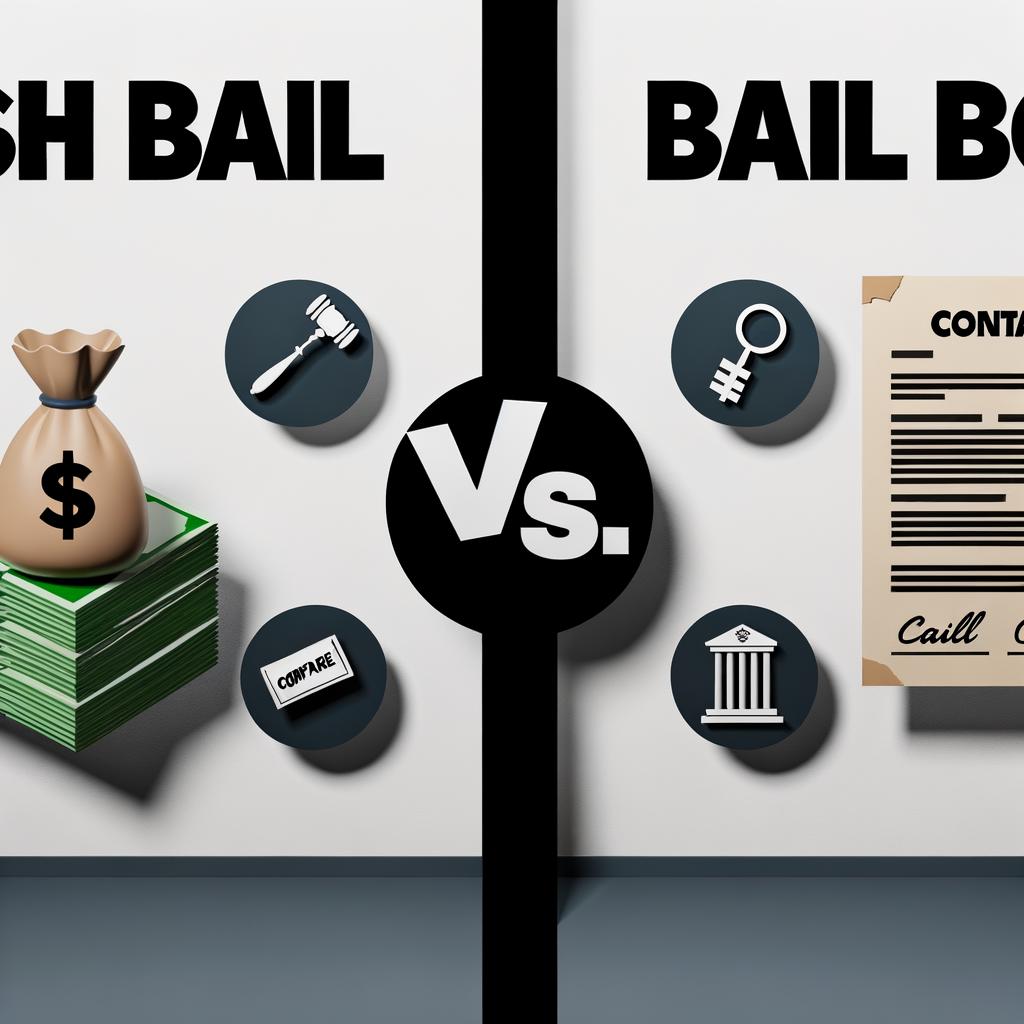
An easy side-by-side to secure the differences
- Purpose: Guaranty bonds guarantee efficiency or compliance in civil and industrial contexts. Bail bonds guarantee appearance in criminal cases. Parties: Surety bonds link a principal, obligee, and guaranty. Bail bonds attach a defendant, court, and bail agent/surety. Premiums and collateral: Guaranty premiums are risk-based and usually lower as a portion, with indemnity main and collateral situational. Bail costs are typically managed, greater as a percent, with constant collateral and rigorous indemnity. Claim sets off and end results: Guaranty declares stem from defaults or infractions and can lead to completion, repair work, or repayments to plaintiffs. Bail declares originate from failing to appear and lead to forfeiture or surrender of the defendant. Duration: Surety commitments can span months to years. Bail bonds normally last up until case disposition, occasionally with routine extensions but hardly ever past a year unless situations are continued.
This contrast is not concerning which bond is "better." They serve different systems. Complex them takes the chance of money, freedom, or both.
Final judgment from the field
If you bear in mind absolutely nothing else, remember that the bond safeguards and what actions it is suggested to secure. A surety bond protects an obligee or the general public from nonperformance and misbehavior. A bail bond protects the court's procedure by securing an offender to their looks. Everything else moves from that distinction.
For companies, deal with the surety as a lasting companion. Invest in tidy publications, realistic quotes, and straightforward interaction. The payback is capability to grow and a guaranty going to lean in when a task wobbles. For family members browsing bond, collaborate with an accredited firm that explains every line you authorize, maintain court dates front and center, and call if anything adjustments. The payback is smoother release and less surprises.
Bonds exist since trust requires scaffolding. Used intelligently, they maintain jobs constructed, licenses truthful, and courts moving. Used thoughtlessly, they drain checking account and strain partnerships. The difference between a surety bond and a bail bond is not simply vocabulary. It is the distinction in between appealing to do the work and guaranteeing to show up. Both assurances issue, and both can be maintained with clear eyes and the best help.
ABBA Bail Bonds 900 Avila St STE 101 Los Angeles, CA 90012 (213) 296-0901 https://abbabailbonds.com